%20(2400%20%C3%97%201600%20px).png)


Relationships are Strengthened in the Repair
Updated: May 5

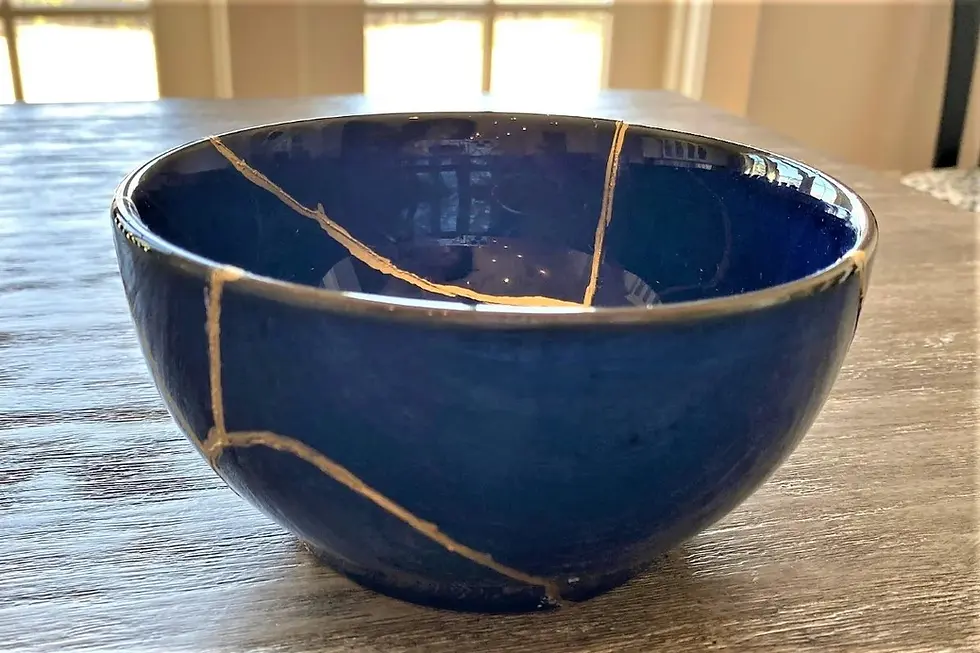
Art work by Morty Bachar https://lakesidepottery.com/
I see many couples in my practice who come in worried that their arguments mean something is deeply wrong. They often say things like, “We fight too much,” or “If we really loved each other, we wouldn’t hurt like this.” The truth is, conflict is normal in any close relationship. What truly matters is what happens afterward—how we repair. In my experience as a therapist, relationships don’t grow stronger because they avoid ruptures; they grow stronger because of the repair that follows. When we can acknowledge the hurt, take responsibility, and reconnect, we actually deepen trust and emotional safety.
This idea reminds me of kintsugi, the ancient Japanese art of repairing broken pottery with lacquer mixed with powdered gold (literally meaning "golden joinery"). Rather than hiding the cracks or discarding the piece, kintsugi highlights the breaks with shimmering gold seams, transforming the object into something often more beautiful, valuable, and resilient than before. The repaired pottery tells a story of survival and care—its history of breakage becomes part of its unique beauty.
In relationships, repairs work much the same way. A rupture doesn't have to mean the end; when tended to with sincerity, vulnerability, and effort, it can leave "golden seams" of deeper understanding, empathy, and intimacy. After a meaningful repair, just like kintsugi pottery, a relationship can become even more authentic, rich, and beautiful—marked not by perfection, but by the strength that comes from having been mended together.
Dr. John Gottman’s decades of research at the Gottman Institute support this. After observing thousands of couples, he found that successful long-term relationships (“the masters”) aren’t defined by having less conflict than struggling couples (“the disasters”). Instead, the masters are skilled at making and accepting repair attempts during and after arguments. A repair attempt can be as simple as saying, “I’m sorry I got defensive,” offering a gentle touch, using soft humor, or even saying, “Can we start over?” Gottman’s studies show that the success of these repairs is one of the strongest predictors of relationship satisfaction and stability.
Emotionally Focused Therapy (EFT), developed by Dr. Sue Johnson, takes this further through an attachment lens. In EFT, we understand romantic bonds as attachment relationships—much like the bond between parent and child. Ruptures happen when we feel emotionally disconnected or unsafe. Effective repair rebuilds that secure bond. When one partner reaches out vulnerably, and the other responds with care, the relationship doesn’t just return to baseline; it becomes more resilient. Over time, these cycles of rupture and repair create a stronger, safer connection.
I often ask clients: What does repair look like for you right now? Do you know how to signal that you want to reconnect? Do you notice when your partner is trying to repair, even if it’s clumsy at first?
Here are a few gentle ways to practice repair:
Name your own part: “I can see I raised my voice, and that probably felt scary. I didn’t mean to shut you down.”
Soften with affection: A hug, holding hands, or a kind look can speak volumes.
Use “I” statements to share feelings: “I felt hurt when that happened, and I miss feeling close to you.”
Validate your partner: “I get why that upset you. That makes sense.”
Repair doesn’t have to be perfect. It just has to be sincere and timely. The more we practice, the easier it becomes—and the stronger the relationship grows.
If you’re finding repair difficult, that’s okay. Many couples benefit from learning these skills together in therapy. You’re not alone, and small steps toward repair can make a meaningful difference.


Comments